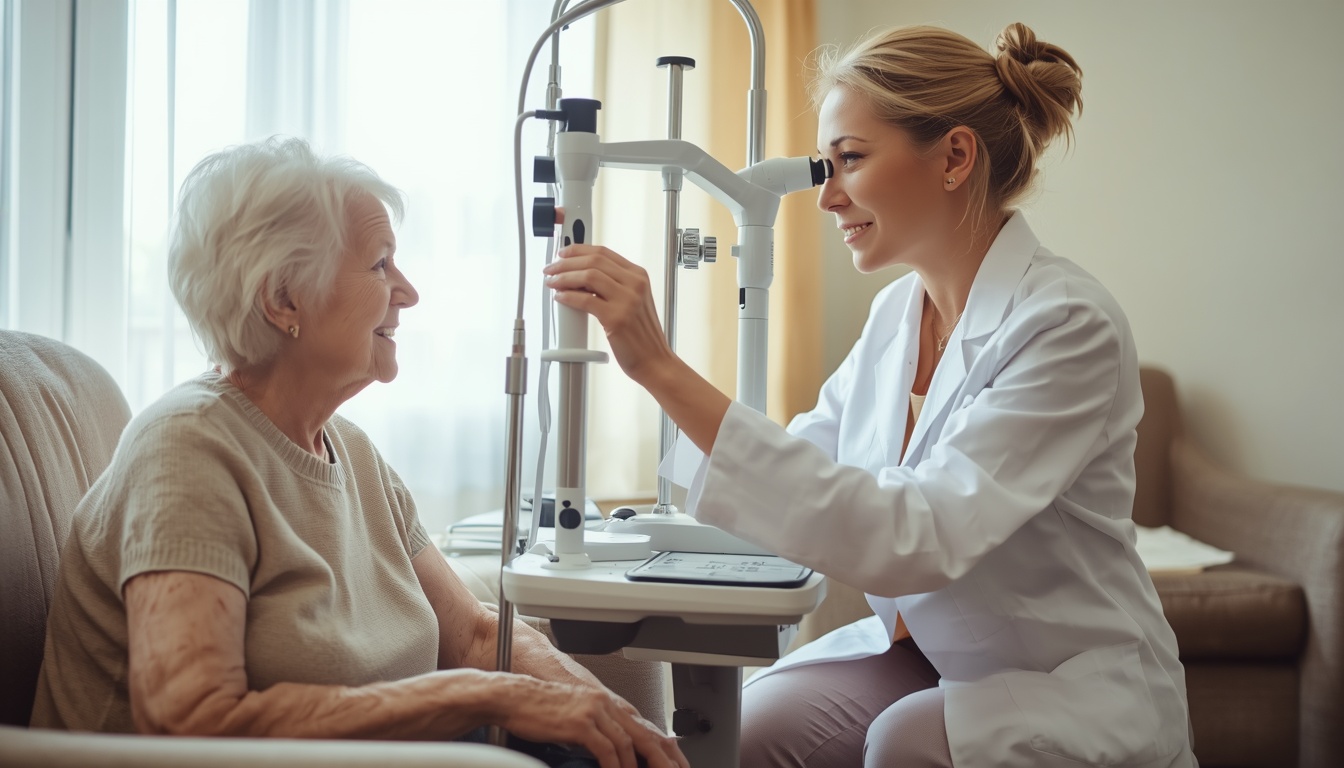
For many care home residents, accessing routine healthcare can be challenging. Mobility difficulties, cognitive conditions such as dementia, and the sheer logistics of arranging transport to appointments mean that essential health checks are often delayed or missed entirely. Eye care is no exception — and yet good vision plays a critical role in the health, safety and quality of life of older adults.
At Almond Eyecare, we visit care homes across London, Hertfordshire and Essex to provide professional NHS and private home eye tests for residents who are unable to attend a high street optician. In this article, we explain why regular eye tests are so important for care home residents, what to look out for, and how our service works.
Why Vision Matters in a Care Home Setting
Good vision supports almost every aspect of daily life — reading, watching television, recognising familiar faces, navigating corridors safely, and engaging in social activities. For care home residents, many of whom are already managing complex health conditions, poor vision can significantly reduce independence and quality of life.
Untreated vision problems in older adults are associated with an increased risk of falls and fractures, social withdrawal and depression, difficulty communicating and engaging with carers and family, accelerated cognitive decline, and reduced ability to carry out everyday activities.
Many of these outcomes are preventable. A comprehensive eye examination can identify treatable conditions, ensure glasses prescriptions are up to date, and detect early signs of more serious eye disease.
Common Eye Conditions in Care Home Residents
Older adults are at higher risk of a number of eye conditions, many of which develop gradually without noticeable symptoms in their early stages. The most common conditions we identify during care home visits include:
Cataracts
Cataracts cause the lens of the eye to become cloudy, leading to blurred or hazy vision, increased sensitivity to glare, and difficulty seeing in low light. Cataracts are extremely common in older adults and can be effectively treated with surgery. Early identification allows timely referral, preventing unnecessary deterioration in vision.
Age-Related Macular Degeneration (AMD)
AMD affects the central part of the retina and can cause blurred or distorted central vision, making it difficult to read, recognise faces, or watch television. Regular monitoring is essential, particularly for wet AMD, where prompt treatment can help preserve vision.
Glaucoma
Glaucoma causes damage to the optic nerve, often as a result of raised pressure within the eye. It typically develops slowly and without symptoms, which is why regular eye examinations are so important. Left untreated, glaucoma can lead to significant and irreversible sight loss.
Diabetic Eye Disease
Residents living with diabetes are at increased risk of diabetic retinopathy and other eye complications. Although diabetic eye screening is provided separately through the NHS, a comprehensive eye examination provides an important additional layer of monitoring and ensures spectacle prescriptions remain accurate.
Dry Eye Disease
Dry eye is particularly common in older adults and can cause persistent discomfort, irritation, watering and blurred vision. Many residents are unaware that their symptoms are treatable. A simple assessment and personalised treatment plan can make a significant difference to daily comfort.
How Often Should Care Home Residents Have an Eye Test?
The NHS recommends that adults have an eye examination at least every two years. However, for care home residents — many of whom have existing eye conditions, diabetes, or are taking medications that can affect the eyes — more frequent examinations may be appropriate.
As a general guide:
- Residents with no known eye conditions — every two years as a minimum
- Residents with glaucoma, AMD or diabetic eye disease — annually or as advised by their hospital eye clinic
- Residents with dementia or other cognitive conditions — annually, as changes in vision can be difficult to self-report
- Any resident who reports changes in their vision — as soon as possible
We work with care home managers to schedule regular clinic days, ensuring all residents receive timely eye care without disrupting the daily routine of the home.
The NHS Home Eye Test — What Care Homes Need to Know
Most care home residents qualify for a fully-funded NHS home eye test. Under NHS regulations, patients who are unable to leave their place of residence without the help of another person, or who would be putting their health at risk by doing so, are entitled to receive a domiciliary eye examination at no cost.
As an NHS-contracted domiciliary optician, Almond Eyecare manages all NHS paperwork on behalf of residents and their families. There is no need for a GP referral — simply contact us and we will confirm eligibility and arrange a convenient appointment.
What Happens During a Care Home Eye Test?
Our visits are designed to be as straightforward and stress-free as possible for residents, carers and care home management teams alike.
Before our visit, we liaise with the care home manager or coordinator to arrange appointments for residents, confirm which residents require NHS or private examinations, and identify any specific needs or conditions we should be aware of.
During the appointment, each resident receives a comprehensive eye examination in their own room or a suitable quiet space within the home. Our examinations include a full assessment of vision and spectacle prescription, an eye health examination to check for glaucoma, cataracts, macular degeneration and other conditions, a review of current glasses including adjustments and repairs where needed, and a discussion of findings with the resident and any carer or family member present.
Where new glasses are required, residents choose from a range of frames brought to the home on the day. Glasses are made to order and returned to the care home for fitting and adjustment.
After each visit, we provide written reports for care home records and arrange any necessary referrals to GPs or hospital eye services.
Dementia and Eye Care — A Specialist Approach
Many care home residents live with dementia, Alzheimer’s disease or other cognitive conditions. Standard eye examinations can be challenging for patients who struggle to follow instructions, sit still for extended periods, or communicate their symptoms clearly.
Our opticians are experienced in adapting examination techniques for patients with cognitive conditions. We use objective assessment methods that do not rely on verbal responses, take as much time as each resident needs, and work closely with carers to ensure the appointment is as calm and comfortable as possible.
For residents with dementia, good vision is particularly important. Research suggests that untreated vision problems can worsen confusion and agitation, while ensuring glasses are up to date and well-fitting can help residents maintain their connection with their surroundings.
Spectacle Supply, Repairs and Aftercare
One of the most common issues we encounter during care home visits is residents wearing broken, ill-fitting or out-of-date glasses. Frames may be lost, damaged or simply no longer providing the correct prescription — all of which can significantly affect a resident’s ability to see clearly and safely.
Our service includes a full range of spectacle frames brought directly to the care home, professional dispensing and fitting, adjustments and repairs to existing glasses wherever possible, and ongoing aftercare with return visits as required.
We understand that glasses are important personal items for residents, and we take care to ensure every pair fits well and is clearly labelled to reduce the risk of loss within the home.
Arranging Eye Care for Your Care Home
If you are a care home manager, deputy manager or healthcare coordinator looking to arrange regular eye care for your residents, we would be delighted to help.
We cover care homes across London, Hertfordshire and Essex and offer flexible scheduling to fit around your residents’ routines and your team’s needs. We are happy to visit regularly on a scheduled basis, ensuring no resident misses out on the eye care they need.
Good vision care is not a luxury — it is an essential part of supporting the health, dignity and independence of every care home resident.
To arrange a visit or find out more about our care home eye care service, please contact us at info@almondeyecare.com or complete our online booking form. We respond within one working day and are always happy to discuss your residents’ needs.